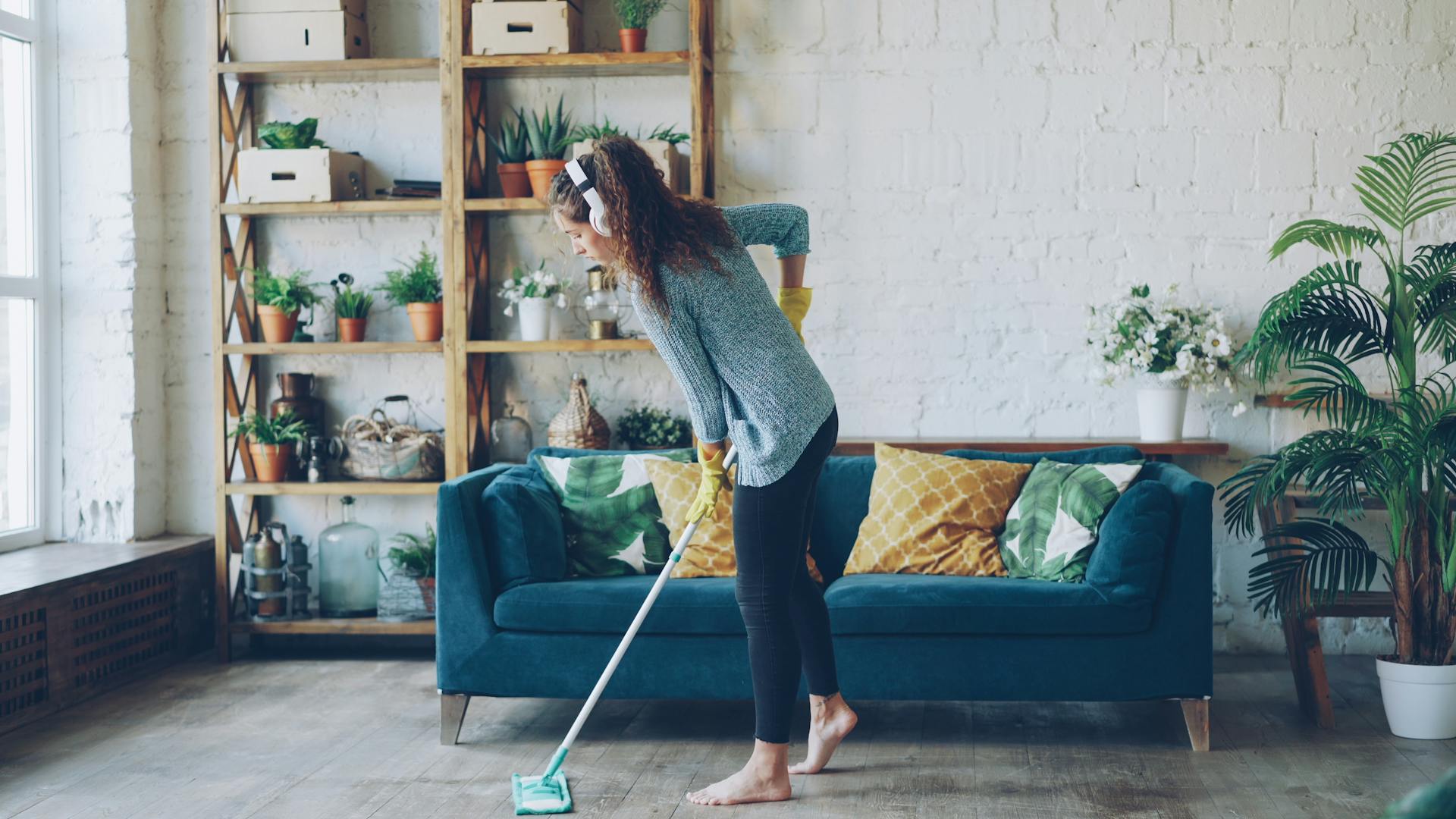

How to deep-clean your NYC apartment this spring (and what to rent for it)
The windows are finally opening, the heat is off, the rug suddenly looks dingy in the daylight. Time for the annual NYC apartment spring deep-clean. Here's the order of operations, the gear that actually works, and what to rent instead of buying.
Quick answer
A NYC apartment spring deep-clean works best in this order: declutter first, dust top-to-bottom, deep-clean fabric surfaces (rugs, couches, mattresses) with a rented carpet cleaner, sanitize hard floors and tile with a steam cleaner, then finish with windows and air-quality (open the windows, change filters). The big gear — portable carpet cleaner, steam cleaner — is the part most NYC apartments don't own and don't need to. Rent both from a neighbor on Green Gooding for around $35 each per 48 hours, do the whole apartment in one weekend, return them Monday. Total spend usually $70 for the deep-clean weekend, far less than buying machines that live in your closet 50 weeks a year.
Spring deep-cleaning a NYC apartment is one of those tasks that becomes obvious in May — when the sun finally hits the rug at the right angle and you can suddenly see all the things winter hid. The job feels overwhelming until you separate it into the right order, with the right gear. Most NYC apartments don't own a real carpet cleaner, a steam cleaner, or any of the larger machines that make the difference between "vacuumed" and "actually clean." That's fine — neighbors across the five boroughs rent them out for $35 a weekend, and you only need them once or twice a year.
Here's the playbook.
The right order of operations
Most spring cleaning fails because people do tasks in the wrong order — cleaning the floor before dusting the bookshelves, mopping before vacuuming, washing windows on a sunny day. The deep-clean version of this for a NYC apartment looks like this:
- Declutter and toss. Bag up clothes, books, kitchen gear you haven't used in a year. Drop at Housing Works, Beacon's Closet, or a stoop in your borough. Bigger items (folding table, old toaster) — neighbors will take them if you post in your building chat.
- Dust top-to-bottom. Ceiling fans, the tops of cabinets and bookshelves, light fixtures, baseboards. Dust falls down — clean high first so you don't redo lower surfaces. Microfiber cloths only; dry first, then damp.
- Vacuum everything — carpets, rugs, hardwood, under furniture you can move. This is prep for the actual deep-clean, not the deep-clean itself.
- Deep-clean fabric surfaces. Rugs, couches, mattresses. This is where rented gear earns its weekend. (Sections below.)
- Sanitize hard floors. Steam clean tile, grout, sealed hardwood, vinyl, bathroom floors. This is also where rented gear pays for itself — most home steam cleaners are far more effective than a mop-and-bucket.
- Bathroom and kitchen deep-clean. Tile and grout (the steam cleaner from step 5 helps here too), under the fridge, behind the toilet, inside the oven, refrigerator coils.
- Windows + air. Open every window. Clean the panes on a cloudy day (sun makes streaks visible too late). Change HVAC and air-purifier filters if you have them.
- Return the rented gear. Same neighbors usually take same-day or next-day returns.
Each section below covers the gear and the technique.
Step 4 — Deep-clean rugs, couches, and mattresses (carpet cleaner territory)
This is the part of spring cleaning that most NYC apartments skip — because they don't own the right machine. Vacuuming pulls surface dirt; a real deep-clean requires water, detergent, agitation, and extraction. That's what a portable carpet cleaner does — and what a regular vacuum, mop, or spray bottle can't.
What a portable carpet cleaner does:
- Sprays a water-and-detergent solution into the fibers
- Agitates with a rotating brush
- Vacuums the dirty liquid back out into a separate dirty-water tank
The third step — extraction — is the part most people don't have at home. It's what pulls out the months of dust, dander, spills, and city soot that have soaked into rug fibers and couch foam.
For rugs: Move furniture off the rug if possible. Pre-vacuum thoroughly. Spot-treat any visible stains with an enzyme cleaner (15 minutes' sit time). Run the carpet cleaner in straight overlapping passes, working from the far corner toward the door. Two passes if heavily soiled. Let the rug dry fully before walking on it — usually 6–12 hours depending on humidity. Open windows to speed dry.
For couches and upholstered chairs: Use the upholstery attachment on the same carpet cleaner (most include one). Test in a hidden corner first for color fastness. Check cushion cleaning codes (W / S / S/W / X — see the pet-accident playbook for the full breakdown). For "W" code synthetic couches, the upholstery attachment with a mild detergent works perfectly. For "S" code couches, use solvent-based upholstery cleaner instead.
For mattresses: Strip the sheets and pad. Vacuum the mattress with a wand attachment. Spot-treat any visible spots. Run the upholstery attachment lightly over the whole surface. Most experts recommend a deep-clean of mattresses every 6–12 months — especially if anyone in the home has allergies. Let it dry 6+ hours before remaking the bed.
Renting a carpet cleaner for the weekend?
Browse carpet and upholstery cleaners on Green Gooding →
Pickup from a neighbor in Brooklyn, Manhattan, Queens, the Bronx, or Staten Island · around $35 for 48 hours · most listings include an upholstery attachment for couches and mattresses.
Step 5 — Sanitize hard floors and tile (steam cleaner territory)
Carpet cleaners and steam cleaners are different machines — using the wrong one for the wrong job can either fail to clean or actively damage the surface. For carpets and upholstery, use a carpet cleaner. For hard surfaces — tile, grout, sealed hardwood, vinyl, bathroom floors — use a steam cleaner.
A steam cleaner heats water to 200–300°F and shoots pressurized steam out of a nozzle or pad. The heat does the work: it kills bacteria, breaks down grease, and lifts stuck-on grime that mopping leaves behind. It doesn't extract liquid — it just sanitizes and lifts — which is why it's wrong for fresh stains or carpet padding, but exactly right for tile and grout.
For bathroom and kitchen tile: Move everything off the floor. Sweep first. Steam the floor in slow back-and-forth passes; the steam loosens grout grime that a mop can't touch. For grout specifically, use the detail attachment most steam cleaners include — it concentrates the steam into the grout lines.
For sealed hardwood: Steam mops are debated. The honest answer: most sealed modern hardwood can handle light steam, but avoid letting water pool, don't use it on damaged or older floors, and test in a closet corner first. For unsealed wood — skip the steam mop entirely.
For sealed vinyl or laminate: Steam works well. Same rules — don't let water pool.
For unsealed concrete (basements, some lofts): Steam works. The heat helps lift years of grime that mopping with detergent just spreads around.
The simple rule: carpet cleaner extracts liquid out of fabric; steam cleaner sanitizes hard surfaces with heat. Don't substitute one for the other — running a steam cleaner over a soiled rug bakes the soiling in rather than pulling it out.
Renting both at once?
Browse cleaning rentals on Green Gooding →
Many neighbors list both a carpet cleaner AND a steam cleaner; you can sometimes rent both from the same lender for an easier weekend pickup. Combined: usually $70 for the weekend.
The detailed NYC apartment spring deep-clean checklist
Pin this to your fridge for the weekend you're going to do it. Estimated total time for a one-bedroom: roughly 8–10 hours of active work spread across a weekend.
Friday evening (prep):
- Confirm Green Gooding rental pickup times for Saturday morning
- Run a load of dirty laundry; bag up donations
- Gather supplies: microfiber cloths, enzyme cleaner, mild detergent, dish soap, baking soda, white vinegar, trash bags, gloves
- Make sure the vacuum bag/canister is empty
Saturday morning:
- 9 am: Pick up the carpet cleaner and steam cleaner from neighbors
- 10 am: Open every window in the apartment
- 10:30 am: Declutter — bedroom, living room, kitchen, bathroom. Bag and label donations
- 12 pm: Dust top-to-bottom — ceiling fans, light fixtures, top of cabinets, baseboards
- 1 pm: Lunch + 15-minute break
Saturday afternoon:
- 2 pm: Full apartment vacuum, including under-furniture and behind couch
- 3 pm: Spot-treat visible stains on rug, couch, mattress (enzyme cleaner, 15-minute sit)
- 3:30 pm: Run the carpet cleaner across all rugs (two passes if dirty)
- 5 pm: Run the upholstery attachment on the couch and mattress
- 6 pm: Open more windows, run a fan to speed dry — rugs need 6–12 hours
Sunday morning:
- 9 am: Bathroom deep-clean — scrub the tub, tile, toilet, then steam-clean the floor and grout
- 11 am: Kitchen deep-clean — fridge inside and out, oven, behind appliances, then steam-clean the kitchen floor
- 1 pm: Lunch
Sunday afternoon:
- 2 pm: Windows (cloudy weather best — no streaks). Clean inside panes, frames, and tracks
- 3 pm: Change HVAC filter, air-purifier filter if applicable. Wipe down vents
- 4 pm: Final pass — pillow covers, throw blankets, light fixtures, plant leaves
- 5 pm: Take the trash and donations out
- 6 pm: Sit down, look at how clean the apartment is, eat takeout
Monday morning:
- Drop off the rentals back to the neighbors. Done.
The NYC apartment spring cleaning math — rent or buy?
A decent portable carpet cleaner costs $180–$350 to buy. A decent home steam cleaner runs $80–$200. Combined: roughly $300–$550 in cleaning machines, plus the closet space (real money in a NYC apartment) to store them 50 weeks a year.
Cost-per-use math for most NYC apartments:
- Buying both: $400 average, used 2–4 times a year = $100–$200 per use, before storage cost
- Renting both: ~$70 per spring deep-clean weekend × 2 weekends/year = $140/year, no storage cost, no guilt later
- Hiring professional cleaners: $300–$800 for a deep-clean depending on apartment size
For most NYC apartments, renting wins by a wide margin. The exception: pet households with multiple animals, or households with kids under five — both situations where you might use a carpet cleaner monthly. In those cases, buying may pencil out.
Key takeaways
- Order matters. Declutter → dust → vacuum → deep-clean fabrics → sanitize hard floors → bathroom/kitchen → windows. Do them out of order and you redo the easy stuff.
- Carpet cleaner for fabric. Steam cleaner for hard surfaces. Don't mix them up — using a steam cleaner on a pet-stained rug will permanently set the smell.
- Both machines rent for ~$35 each per 48 hours from neighbors across the five boroughs. $70 total for the weekend.
- Mattress deep-clean every 6–12 months — most people skip this, and it's the highest-impact one for allergy sufferers.
- Time budget: ~10 hours of work across a weekend for a typical one-bedroom. More for a two-bedroom or a family.
- Open the windows. Air-quality is part of "clean."
Ready to deep-clean this weekend?
Find a portable carpet cleaner and steam cleaner near you across the five boroughs — around $35 each for 48 hours. Many neighbors list both, often available for same-day pickup if you message them early.
Frequently asked questions
What's the best order to deep-clean a NYC apartment?
Declutter first, dust top-to-bottom, vacuum everything, deep-clean fabric surfaces (rugs, couches, mattresses) with a rented carpet cleaner, sanitize hard floors and tile with a steam cleaner, finish with bathroom/kitchen deep-clean and windows. Doing them out of order means redoing the easy steps.
Do I really need a carpet cleaner for spring cleaning?
For deep-cleaning rugs and upholstered furniture, yes — a regular vacuum can't extract liquid or dissolved soil from carpet fibers and foam. A portable carpet cleaner sprays detergent, agitates with a brush, and vacuums the dirty liquid back out. That extraction step is the difference between "vacuumed" and "deep-cleaned." Most NYC apartments don't own one; renting from a neighbor is around $35 for 48 hours.
Carpet cleaner vs steam cleaner — which do I need?
Both, but for different surfaces. Carpet cleaner = rugs, couches, mattresses, upholstered chairs. Steam cleaner = tile, grout, sealed hardwood, vinyl, bathroom and kitchen floors. Don't substitute one for the other — using a steam cleaner on a fresh stain or pet-soiled rug will permanently set the soiling.
How long does it take to spring deep-clean a NYC one-bedroom apartment?
Roughly 8–10 hours of active work, spread across a weekend. Most efficient when you have the carpet cleaner and steam cleaner rented for the whole weekend so you can let surfaces dry between steps.
Can I just hire a professional cleaner instead?
Yes — professional deep-cleans in NYC run $300–$800 depending on apartment size and condition. For most one-bedrooms, renting your own gear and doing it yourself costs about $70 in rentals plus a weekend of work. For a two-bedroom, the math gets closer; for a family home or apartment in rough shape, professional may be worth it. Many NYC residents do a deep-clean themselves with rented gear once a year and hire professional cleaners between annual deep-cleans.
Should I deep-clean my mattress?
Most experts recommend a deep-clean every 6–12 months, more often if anyone in the home has allergies or asthma. Strip the bedding, vacuum the mattress, spot-treat visible stains, then run a carpet cleaner's upholstery attachment lightly over the whole surface. Let it dry 6+ hours before remaking the bed.
Where can I rent a carpet cleaner and steam cleaner in NYC?
Green Gooding lists portable carpet cleaners (most with upholstery attachments) and steam cleaners from neighbors across the five boroughs — around $35 each for 48 hours. Pickup from a neighbor in your borough; many offer same-day pickup if you message them early.
Is spring the best time to deep-clean a NYC apartment?
Late spring (May–early June) is generally the best window: heat is off, windows can open, humidity is moderate (rugs and upholstery dry faster), and you can see what winter hid. Fall (October–early November) is the second-best window for the same reasons in reverse. Midsummer is too humid; midwinter has the wrong air-circulation conditions.