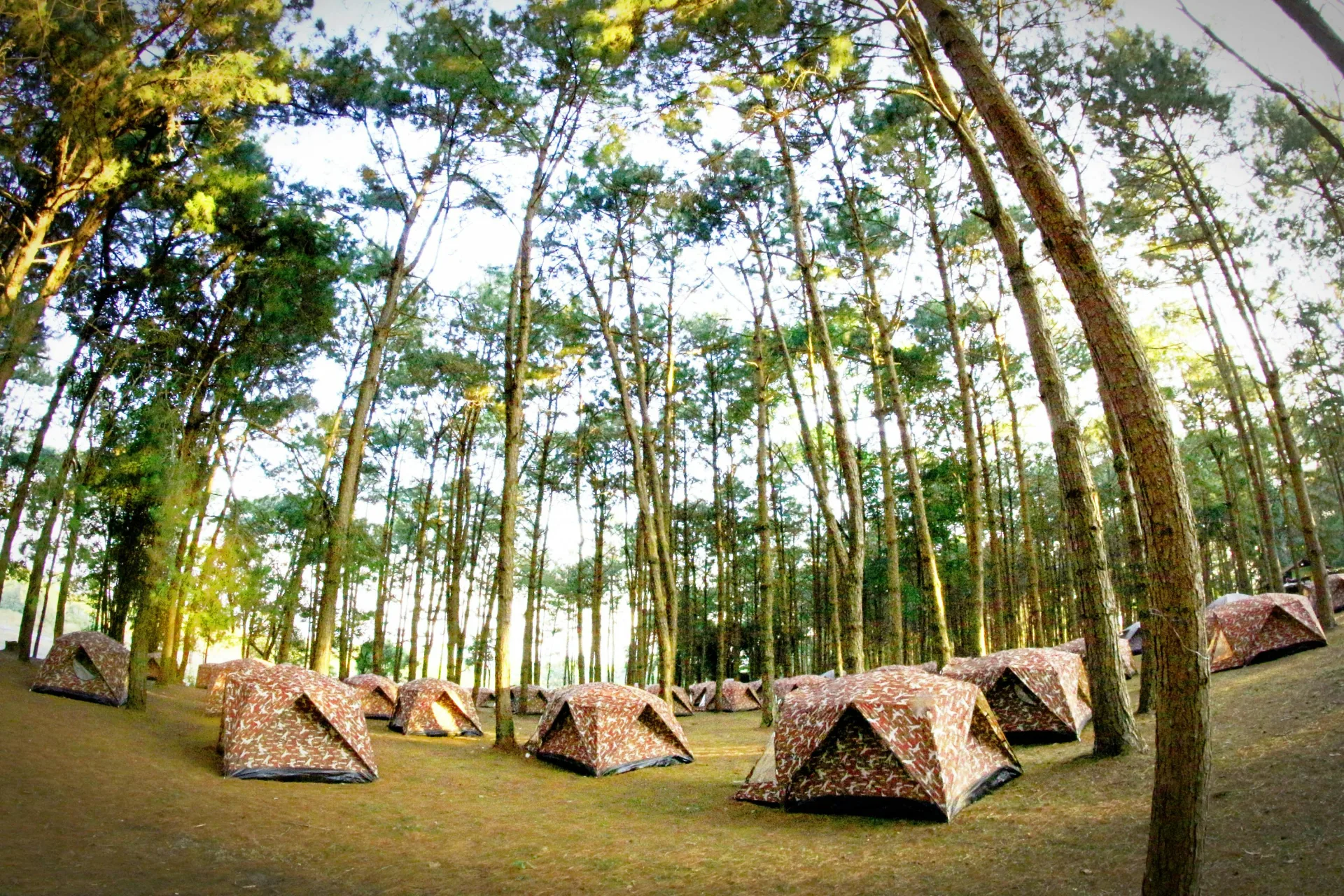

How Much Does a Good Tent Cost? Rent vs Buy for NYC Weekend Campers
Planning a weekend at Bear Mountain, a music festival upstate, or a Fire Island overnight? The tent question hits earlier than you expect — and for a NYC apartment camper, the answer is rarely "buy one now." It's more like "where am I going to store it?" and "how often will I actually use it?" Those two questions are exactly the friction we hear from NYC renters most often, and camping gear is the textbook case. Here is the full breakdown.
Quick answer
A good tent for a NYC weekend camper costs $200 to $400 new for a 2- or 3-person 3-season tent that actually keeps you dry. Festival and beach tents start around $80; serious 4-season backcountry tents reach $700 and beyond. The catch for NYC apartment campers: a tent that costs $250 to buy needs the equivalent of $40 to $80 per year in apartment storage space (about half a cubic foot of dead closet) and gets used 2–6 weekends a year. Renting one from a neighbor across the five boroughs typically runs $25–$45 for a 48-hour weekend window — meaningfully cheaper than buying if you go fewer than 6–8 times a year, and zero storage cost the rest of the time.
What "a good tent" actually means
Tent shopping gets confusing fast because the price range goes from $40 (a Walmart pop-up) to $1,200 (an MSR 4-season expedition tent), and the marketing copy across all of them sounds basically identical. Here is what actually separates a "good" tent from a wet weekend:
- Season rating. A 3-season tent handles spring, summer, and fall — the only conditions a NYC weekend camper will realistically encounter. A 4-season tent is built for winter mountaineering and is overkill (and overpriced) for anyone not climbing in February.
- Waterproof rating (hydrostatic head). Look for a rainfly with at least 1,500 mm and a floor at 3,000 mm or higher. Below that, you are buying a sun shelter, not a tent.
- Pole material. Aluminum poles bend before breaking and can be repaired in the field. Cheap fiberglass poles shatter, often the first time you set up in a parking lot in the dark.
- Footprint capacity. Tent capacity labels lie. A "2-person tent" comfortably fits 1 adult + their gear. A "3-person tent" fits 2 adults. Buy one size up from the people count for breathing room.
- Vestibule. A small covered area outside the door where wet boots and a backpack live so they do not soak the inside. Real backpacking tents have it; festival pop-ups do not.
If a tent listing brags about "fast setup" and "spacious interior" but does not list hydrostatic head or pole material, it is a beach tent. Fine for Fire Island in July, useless if rain rolls in at Bear Mountain Saturday night.
The tent cost range, by category
Tents fall into five buying tiers, each with a typical price range:
| Category | Capacity | Typical price | What you get |
|---|---|---|---|
| Festival / beach pop-up | 1–2 | $40 – $90 | Sun shelter, light rain at best, single-use mindset |
| Entry car-camping | 3–4 | $120 – $200 | Decent rain, easy setup, heavy (~7 lbs) |
| Mid-range 3-season backpacking | 2 | $200 – $400 | Real waterproofing, aluminum poles, light enough to carry |
| Premium 3-season backpacking | 2–4 | $400 – $700 | Featherweight, bombproof, single-wall designs |
| 4-season / expedition | 1–4 | $500 – $1,500+ | Winter mountaineering, not for weekend campers |
For most NYC weekend campers — Bear Mountain, Harriman, the Catskills, a Coachella-style festival, Fire Island overnight — the sweet spot is the mid-range 3-season backpacking tent at $200 to $400. It is light enough to subway and Zipcar with, weatherproof enough for the occasional summer thunderstorm, and durable enough to last 5+ years of moderate use.
The two things NYC renters hate about buying camping gear
Most tent-cost articles end at the purchase price. For a NYC apartment camper, that is the part where the article stops being useful — because the two real costs of owning a tent in NYC are the ones that never show up on the price tag:
- The space it takes for the 50 weekends a year you are not camping.
- The fact that you might honestly only use it once every year or two.
These are the two friction points we hear from NYC renters most often, and camping gear is the textbook example. A "$300 tent" you use once every two years is closer to a $150-per-trip purchase that also occupies your closet 24/7. Stack the rest of the kit on top — sleeping bag, pad, cooler, stove, bike rack — and you are dedicating a meaningful chunk of NYC apartment square footage to gear that sleeps for 50 weeks at a time.
The storage cost most reviews skip
A typical 2-person 3-season tent stuffs into a sack about 18" × 7" — roughly 0.4 cubic feet. Add the footprint, stakes, and the cooler / sleeping pad / camp chair / bike rack you also bought, and a single weekend's worth of gear takes about 4 to 6 cubic feet of closet or under-bed space.
Manhattan and Brooklyn rent per square foot runs $4–$8/month on average. Translating to gear-storage cost:
- A small chunk of closet for a tent + bag (~0.5 cu ft, or about 0.15 sq ft of floor area): roughly $1 per month, $12 per year
- Full camping kit (tent + bag + pad + cooler + bike rack + stove): roughly 0.6 sq ft, or $50–$80 per year in storage cost
That cost is invisible because it is bundled into your rent — but it is real, and it lasts every month whether you camp or not.
"I might only use it every two years"
This is the second friction point and it is the bigger one. Most NYC apartment dwellers who think they "should" buy a tent end up using it once during the summer they bought it, once the next year, and then it lives in a closet until a 2028 cleaning purge.
The math is unforgiving:
- A "$250 tent" used once every two years for 6 years = 3 trips × $250 = $83 per trip, with three full years of closet space in between.
- The same tent used twice a year for 6 years = 12 trips × $260 (with storage) = $22 per trip — but you also have to actually go camping that often.
- Renting at $30 / 48-hour weekend = $30 per trip, every time, zero storage, zero "what if I don't use it".
If you are honest with yourself about how often you are going to camp — for most NYC apartment dwellers, that is 2 to 4 weekends a year, max — the breakeven for owning a tent does not show up until you camp 6+ weekends a year. Below that, the storage cost compounds and the per-trip cost gets ugly. Above it, you have earned the right to fill your closet with gear.
Where do NYC campers actually go?
A grounding tour of the real weekend destinations, so the rent-vs-buy math has the right denominator:
- Bear Mountain State Park (1 hr by Zipcar / Hudson Line + bus). Lean-to and tent camping. 3-season tent is plenty.
- Harriman State Park (1.5 hr by car). Tent and primitive camping; popular June–September.
- Catskills (Kaaterskill, North-South Lake) (2.5 hr by car). Tent camping; expect rain.
- Fire Island (subway + ferry, ~3 hr). Overnight beach camping at Watch Hill — a 3-season tent is overbuilt; festival pop-up works.
- Hither Hills State Park, Montauk (3 hr by car or Long Island Rail Road). Oceanfront tent camping June–October.
- Letchworth, Cherry Springs, the Adirondacks (4+ hr by car). Longer weekend trips; 3-season tent essential.
- Festivals: Electric Forest, Mountain Jam, Catskill Chill, Bonnaroo. Tent camping on-site — typically dry summer weather, basic shelter is enough.
The pattern: most NYC weekend campers go 2–3 times a year, mostly between May and September, mostly to 3-season conditions within 3 hours of the city. A premium $600 tent is overkill; a $40 festival pop-up gets soaked at Bear Mountain in August. The mid-range $200–$400 tent is what fits — but only if you actually use it enough times to justify owning it.
Pickup logistics: getting a tent to your weekend without a car
The other piece of "good tent for NYC" that most reviews miss: you have to physically move it from your apartment to the camp site. Three real cases:
- Renting a Zipcar/Getaround for the weekend. A 2-person tent fits in any trunk; no problem.
- LIRR / Metro-North + bus. Tent sack hangs from a backpack. A 3 lb backpacking tent is doable; a 7 lb car-camping tent is a pain on a hot Friday platform.
- Subway + ferry (Fire Island). A small pop-up festival tent (5 lb in a roll) is the move.
This is the part that pushes a lot of NYC campers toward renting instead of buying. A neighbor who already owns a tent has it pre-packed; you pick up the day before, head out, and return Sunday night — no apartment storage, no subway carry of a $300 box that just sat in your closet since last August. For a real "no gear, no car" NYC weekend (the most common starting point), renting solves both of those problems in one transaction.
Want to try a tent this weekend?
From neighbors across Brooklyn, Manhattan, Queens, the Bronx, and Staten Island · usually around $25-$45 for 48 hours · owners set their own prices, some offer same-day pickup.
Tent rent-vs-buy math for NYC
Pulling it all together with real numbers:
Buying a mid-range $300 tent and using it 4 weekends per year for 5 years:
- Tent: $300
- Apartment storage (~0.5 cu ft × 5 years): ~$60
- Total: $360 ÷ 20 trips = $18 per trip
If you only camp 2 weekends per year:
- Tent: $300
- Storage: $60
- Total: $360 ÷ 10 trips = $36 per trip
If you camp 8+ weekends per year (you are a real outdoors person):
- Tent: $300
- Storage: $60
- Total: $360 ÷ 40 trips = $9 per trip — buying is the move
Renting at $30 per 48-hour weekend window (typical Green Gooding range), no purchase, no storage:
- 2 trips/year: $60/year × 5 years = $300, $30 per trip
- 4 trips/year: $120/year × 5 years = $600, $30 per trip
- 8 trips/year: $240/year × 5 years = $1,200, $30 per trip — buy at this volume
The crossover is around 6–8 trips per year. Under that, renting wins on total cost and wins on storage cost-of-clutter. Over that, buy.
Most NYC apartment campers — even the enthusiastic ones — fall under the crossover. The Bear Mountain trip in May, the festival weekend in July, the Catskills foliage trip in October, and maybe a beach overnight in August is 4 trips. That is a clear rent-not-buy year.
In conclusion
For the average NYC weekend camper, a mid-range 3-season 2-person backpacking tent with aluminum poles, a 1,500+ mm rainfly, and aluminum stakes is the right buy or rent. Don't buy the cheapest one (fiberglass poles will betray you on your first rainy weekend), don't buy the most expensive one (you are not climbing Denali), and don't ignore the two costs most reviews skip: where it lives the other 50 weekends a year, and how often you will actually unpack it.
If you camp 6+ times a year, the math favors buying. If you camp 4 or fewer times a year — which is most NYC apartment dwellers, even the enthusiastic ones — renting one for the weekend from a neighbor is cheaper, frees up the closet space, and lets you match the tent to the trip (a 2-person backpacking tent for the Catskills, a 4-person car-camping tent for the festival, a pop-up for Fire Island) without owning three of everything. If you are not sure how often you will use it, renting once or twice is the cheapest way to find out before you commit a chunk of your apartment to gear that may not see daylight for 18 months.
⛺ Heading out this weekend?
Browse outdoor gear on Green Gooding →
Tents, coolers, bike racks, kayaks, and more — from neighbors across the five boroughs, around $25-$45 for 48 hours. Same-day pickup available from many lenders.
Shopping for another appliance?
Frequently asked questions
How much does a good 2-person tent cost?
A good 2-person 3-season backpacking tent runs $200–$400 new. Look for aluminum poles, a rainfly with at least 1,500 mm hydrostatic head rating, and a covered vestibule. Below $200 you are usually getting fiberglass poles that crack on first hard setup; above $400 you are paying for ultralight features most weekend campers do not need.
Is it cheaper to rent a tent than buy one?
For most NYC apartment campers, yes — meaningfully cheaper. The breakeven point is roughly 6–8 weekends a year. Below that, the cost of buying ($200–$400) plus the closet space the tent occupies the other 50 weekends of the year adds up to more than the per-weekend rental cost ($25–$45). If you camp 3 weekends a year, renting saves you ~$150 over 5 years AND keeps your closet empty. If you camp 8+ weekends a year, buying starts to win on per-trip cost. The honest test: count how many weekends you actually camped in each of the last 2 years. If the answer is "twice total," you are renting territory.
What's the best tent for under $200?
At the $200 threshold you are in the entry car-camping tier — usually a 3- or 4-person tent with mixed-quality poles (aluminum if you are lucky, fiberglass on most of them) and a moderate rainfly. The honest answer: under $200 there is no "great" tent. There are tents that work fine on dry weekends and fail you when it rains hard at Bear Mountain or the Catskills. If your budget is firm at $200, look for aluminum poles, a 1,500+ mm rainfly, and a 3,000+ mm floor — and accept that the build quality won't match a $300 model. A cheaper alternative: rent a $300-class tent for $30 / 48 hours, get the better weather protection without spending the $200, and skip the storage cost entirely.
Is a $100 tent good enough for a weekend at Bear Mountain?
Probably not for a rainy weekend. Most $100 tents are pop-ups with fiberglass poles and a thin rainfly that leaks under sustained rain. They work for dry summer festivals or beach overnights but will let you down at Bear Mountain in August when an afternoon thunderstorm rolls through. For a Bear Mountain weekend, either spend $200+ on a real 3-season tent or rent one for the weekend.
What is a 3-season tent and do I need a 4-season one?
A 3-season tent is built for spring, summer, and fall conditions — moderate rain, light wind, temperatures above freezing. A 4-season tent adds heavier fabric, extra guy lines, and design choices for snow load and high winds, at 1.5x to 2x the weight and price. For 99% of NYC weekend camping (Bear Mountain, Harriman, Catskills, festivals, beaches), a 3-season tent is plenty. Skip the 4-season unless you are winter camping or alpine climbing.
What is hydrostatic head and what rating do I need?
Hydrostatic head is the water column pressure a tent fabric can hold back before leaking, measured in millimeters. A rainfly at 1,500 mm handles standard rain; 3,000 mm handles heavy storms. The tent floor (which sits in puddles) should be at least 3,000 mm, ideally 5,000 mm. If a tent listing does not publish this number, assume it is too low.
Should I rent or buy a tent in NYC?
If you camp fewer than 6 times a year — which is most NYC apartment campers — renting wins on total cost AND on apartment storage. A 48-hour weekend rental on Green Gooding typically costs $25–$45, vs. $200–$400 for a tent plus the ongoing apartment storage cost of a bulky closet box. If you camp 6+ weekends a year, owning starts to pencil out. Either way, renting first is a smart way to try a tent size and brand before committing to buying.
Why do most NYC apartment dwellers rent camping gear instead of buying?
Two reasons, and they are the two things NYC renters tell us they hate about buying outdoor gear: lack of apartment space and not wanting to buy something they will only use once every year or two. A tent that lives in your closet 50 weekends a year is a real apartment cost; a tent you bought last summer and have not opened since is a real financial regret. Renting solves both — no storage, no commitment, and you only pay on the weekends you actually go. Camping gear is the textbook case: it is bulky, seasonal, and easy to overestimate how often you will use it.
Where can I rent a tent in NYC?
Green Gooding lists tents from neighbors across the five boroughs — typically 2- to 4-person 3-season models in the $25–$45 / 48-hour range. Pickup from a neighbor in Brooklyn, Manhattan, Queens, the Bronx, or Staten Island; same-day pickup available from many lenders during the May–September peak.
What size tent do I need for camping with friends?
Tent capacity labels are inflated. Rule of thumb: pick one size larger than the headcount if you want comfortable elbow room. Two adults are comfortable in a "3-person" tent; four adults plus gear want a "5-person" or two separate tents. For festivals, where the tent is mostly just for sleep, capacity labels are closer to honest.
How do I go camping near NYC without a car?
Three options that actually work for car-free NYC campers: (1) Zipcar or Getaround for the weekend — usually $80–$150 for a Friday-evening to Sunday-night rental, fits a 2-person tent + cooler + sleeping kit in any trunk. (2) LIRR / Metro-North + bus to state parks like Bear Mountain (Hudson Line + bus) or Hither Hills, Montauk (LIRR). A lightweight 3 lb backpacking tent makes this doable; a heavy car-camping tent on a hot Friday platform is miserable. (3) Subway + ferry to Fire Island (Watch Hill camping). Pop-up tents only — anything larger is a pain through the subway. For all three, renting the tent (and bigger gear like coolers and bike racks) from a neighbor near you means you only have to physically transport it once, instead of moving it in and out of an apartment closet between trips.
What's the best tent for a music festival — should I rent or buy?
For most NYC festival-goers, rent. A 2- or 3-person pop-up tent in the $30 / 48-hour range covers Governor's Ball, Mountain Jam, Catskill Chill, and similar summer-weekend festivals. Buying makes sense only if you festival 4+ times a year — at that volume, a $60–$100 pop-up tent earns its closet space. For one-festival-a-year people (which is most of us), renting saves the storage AND lets you match the tent to the trip: pop-up for festival, real 3-season tent for the Catskills weekend two months later. Festival weekends (May–September) are peak rental demand, so reserve a few weeks ahead.
How long should a good tent last?
A mid-range $250–$400 tent, treated reasonably (not packed wet, not pitched on rocks without a footprint), should last 5–10 years of moderate weekend use. Tents fail at the seams (re-seam-seal every 2 years to keep them dry) and at the zippers (which die before anything else). A tent that lives in your closet most of the year and goes out 3–4 times is essentially being preserved between trips and will outlast that estimate.